A Modern Kitchen for a 1920s Tudor in Scarsdale: Contemporary clarity inside a classic Westchester home
Intro
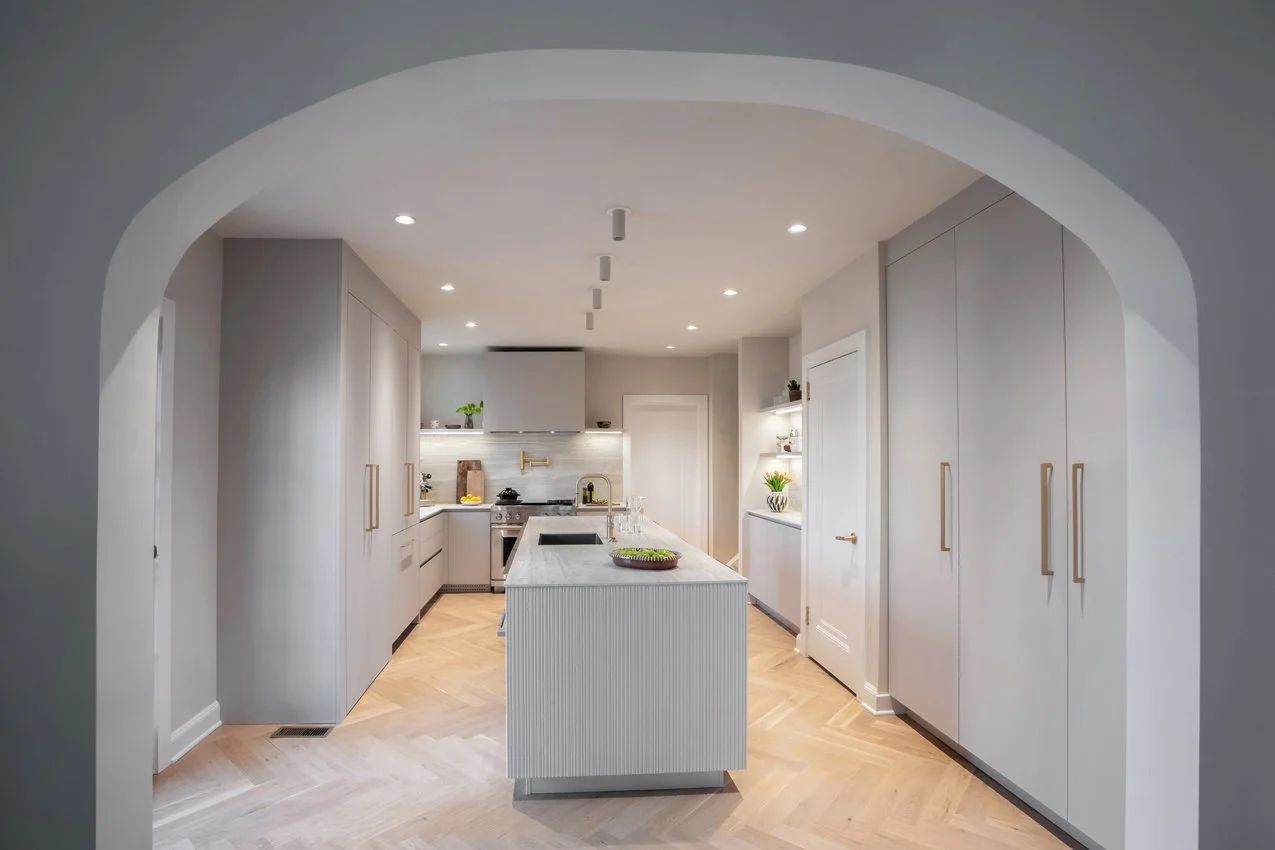
Set on one of Scarsdale’s tree‑lined streets, our senior designer Marc Schlesser worked with our client on this 1920s Tudor Revival home which was reimagined for modern living while still honoring its architectural heritage. The homeowners wanted a contemporary, light‑filled kitchen that preserved the character of the house, including the separate kitchen layout, while creating a more fluid connection to the dining room.
The brief and the constraints
The existing kitchen came with a familiar set of challenges for older homes: limited uninterrupted wall space, multiple perimeter doors, and relatively low ceilings, creating a visually fragmented room that felt smaller than it needed to be. Our design goal was to bring clarity, cohesion, and lightness to the space without erasing its period character.
Design strategy: quiet architecture, strong centerpiece
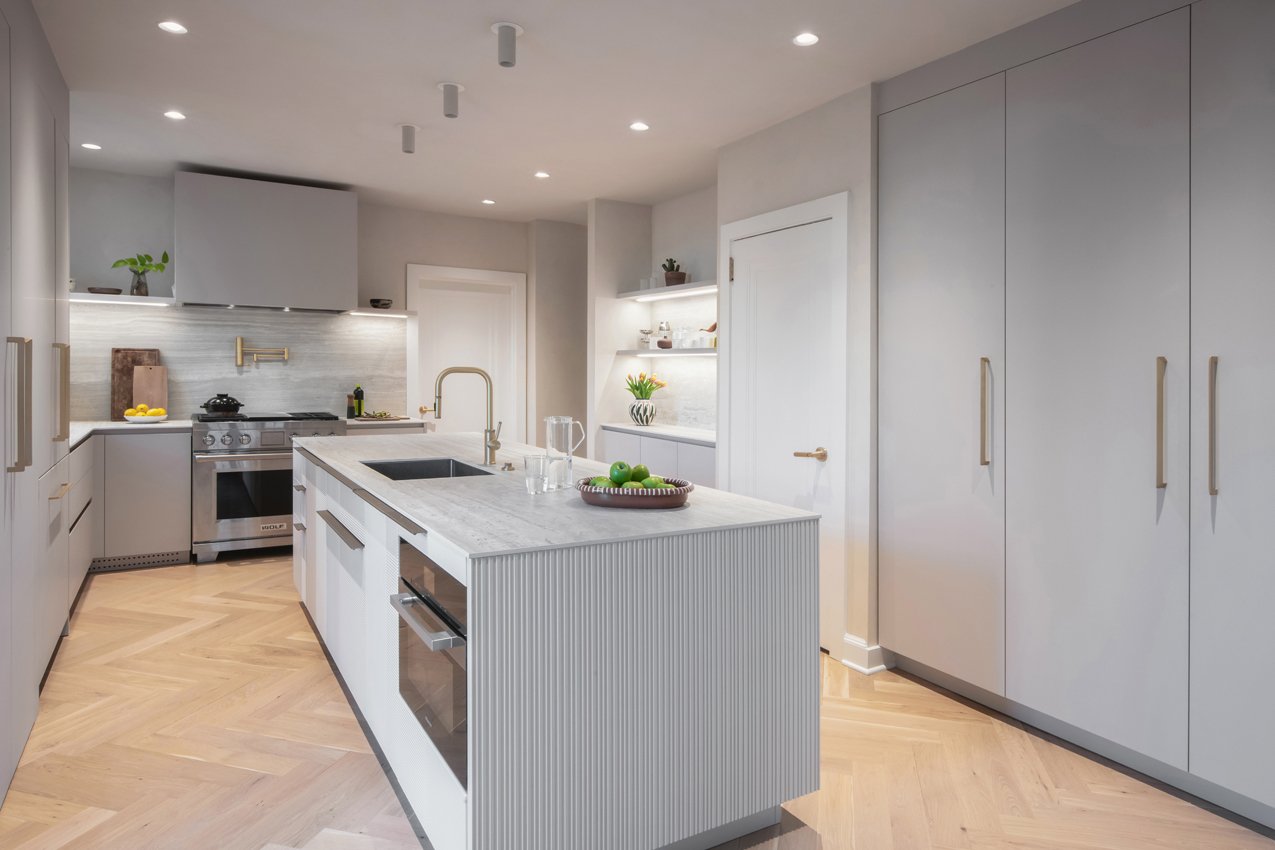
We developed a carefully curated palette and a restrained, architectural approach to the millwork. Cabinetry on the perimeter was designed to blend into the walls, allowing the room’s proportions and openings to remain legible rather than crowded. A softly textured porcelain slab was selected for the work surfaces to add depth and interest without visual noise.
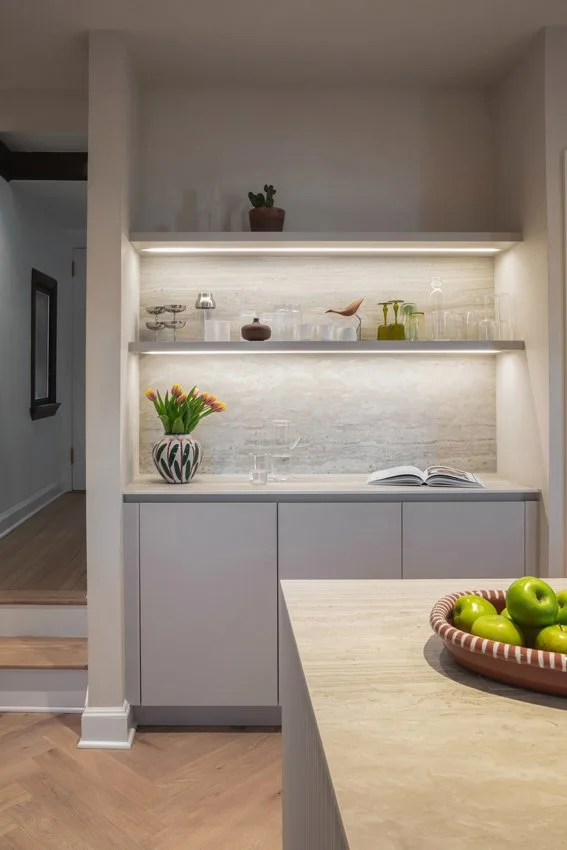
Storage was re‑organized with tall pantry units and edited open shelving, so everyday items have a designated place and the room reads as open and uncluttered. Layered lighting—combining integrated task lighting with warm ambient fixtures—adds both function and atmosphere, supporting everything from weekday cooking to evening entertaining.
The Intarsio island: a contemporary focal point
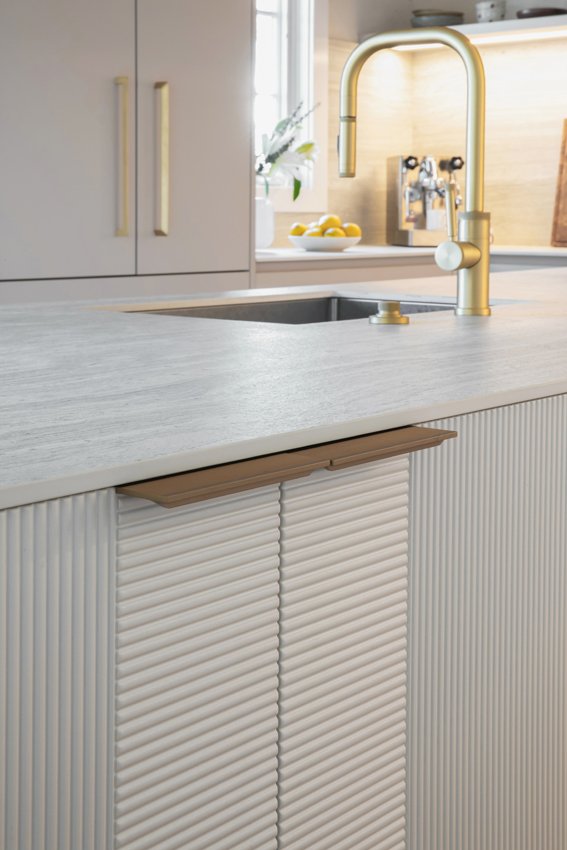
At the center of the space, a new island becomes the primary architectural gesture. Using Cesar’s Intarsio collection, the island behaves like a piece of contemporary furniture rather than a block of cabinetry. Inspired by traditional Italian marquetry, Intarsio’s interplay of horizontal and vertical ridges gives the island subtle texture and rhythm, catching light as you move through the room.
A light metallic finish softly reflects surrounding tones, while matte gold hardware and fixtures introduce a layer of understated luxury. The perimeter cabinetry is finished in durable Technomat laminate, chosen for its ease of maintenance and its ability to hold a quiet, smooth color field that doesn’t compete with the island.
Creating a Semi-Open Kitchen for Better Living
Rather than merging the kitchen and dining room into a single open space, the wall between them was opened to create an arch. This move improves the flow between the reception areas and supports a more informal living and dining experience.
Partners and craft
This kitchen renovation was part of a larger, comprehensive renovation of the home. For this project, Gregory Hitchcock Design collaborated with SI Design Architects and J Ferreira Construction Corp. to align millwork, architecture, and construction sequencing. The kitchen, led by our senior designer Marc Schlesser, features an eclectic mix of Cesar collections—Intarsio for the island, Maxima 2.2 for the perimeter—paired with Wolf-Sub‑Zero appliances and precision‑fabricated counters by Faithful Countertops.
Captured by photographer Costas Picadas, the finished space is a Westchester kitchen that balances high‑end Italian craftsmanship with a warm, contemporary New York sensibility.
If you’re planning a renovation in a historic or character home and want a kitchen that feels both modern and true to the house, our team can help you navigate that balance. Connect with us to discuss your project or visit our showroom in Manhattan to explore Cesar’s Intarsio and Maxima 2.2 collections in person.