From Mise en Place to Millwork: Why Designing a Kitchen Is Like Preparing a Complex Meal
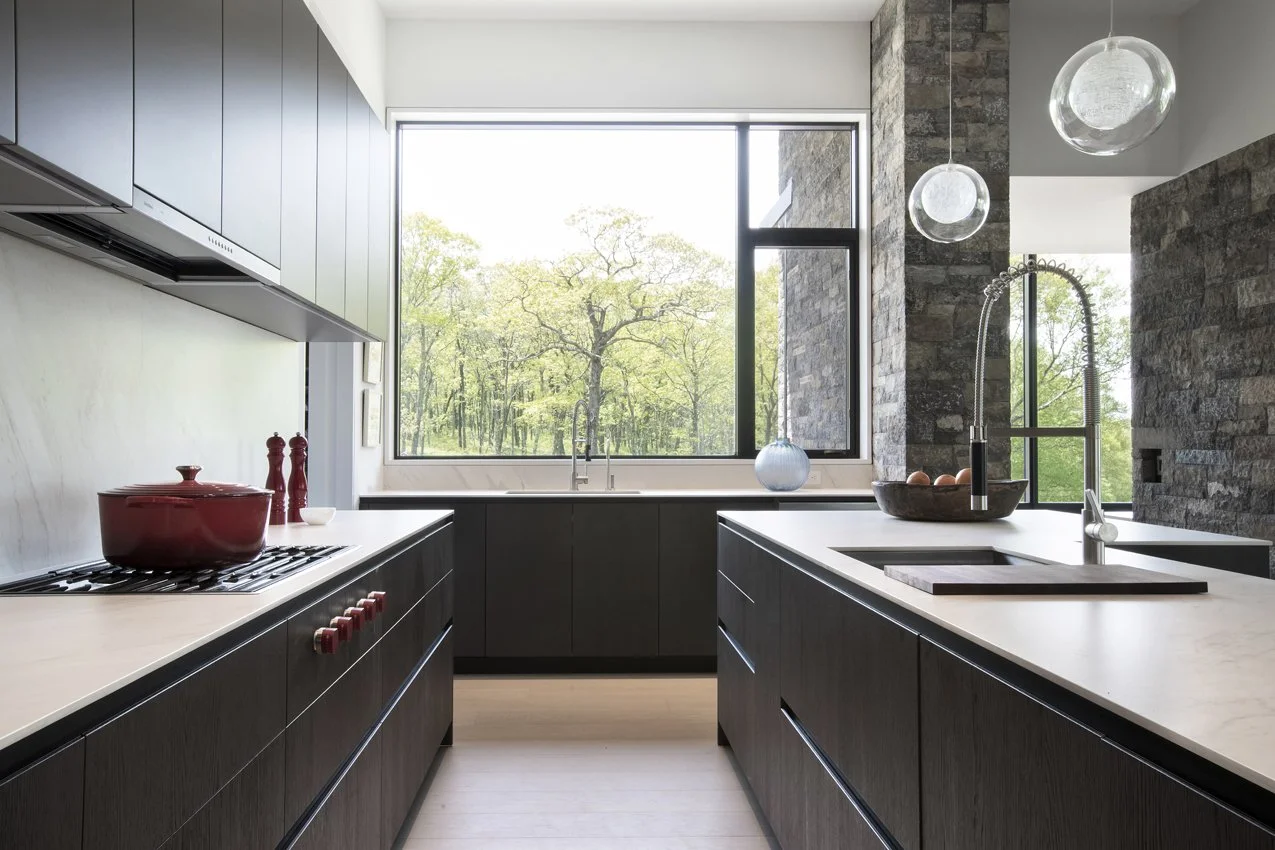
Pawling NY Modern Country
Why Designing a Kitchen Is Like Preparing a Complex Meal
Designing a new kitchen and preparing a complex meal might seem like completely different activities—one lives in floor plans and elevations, the other in recipes and ingredients. In reality, they follow a remarkably similar logic.
Both require a clear vision, careful preparation, and dozens of well-timed decisions that the guest—or the homeowner—may never fully see. That invisible work is where the value lies. This post is an invitation into that process.
1. The Brief vs. the Recipe: Defining What "Success" Tastes Like
Every successful kitchen project starts with a brief the same way every successful meal starts with a recipe—or at least a clear idea of what you're trying to serve.
For a meal, the questions might be: Who is coming? Are there dietary restrictions? Is this a weeknight dinner or a once-a-year celebration? How many courses? What mood do we want to create?
For a kitchen, the brief is similar: Who will actually cook here? How often? Is this a family hub, a serious chef's workspace, or both? What do you entertain like? Which appliances are non-negotiable? How do you want the space to feel at 7 AM vs. 7 PM?
Architects and designers use this "recipe" to make sure the design answers real needs instead of just following trends. A beautiful kitchen that doesn't support how you live is like a gorgeous dish no one wants to eat twice.
2. Mise en Place: The Unseen Preparation
Professional chefs swear by *mise en place*—everything in its place before the first pan hits the stove. Ingredients are washed, chopped, portioned, and lined up so the cooking can flow.
Kitchen design has its own version of mise en place, and most of it happens long before any cabinet is installed.

Mise en place - professional kitchen preparation
Behind the scenes, a well-run design process includes:
Site measurements that go far beyond "length of the wall" to include out-of-level floors, out-of-plumb walls, radiators, risers, beams, soffits, and existing utilities.
Coordination with architects, building management, and contractors about what can move and what absolutely cannot.
Appliance specifications, clearances, ventilation paths, and electrical planning so that the final composition looks effortless, not forced.
Storage planning down to categories: where the everyday plates live versus serving platters, spices, oils, sheet pans, small appliances.
Just as a chef preps dozens of small containers no guest ever sees, designers prepare drawings, checklists, and coordination emails that never show up in the final photos—but make the outcome possible.
3. Layering Flavors, Layering Functions
A complex meal doesn't rely on a single flavor. It layers acidity, richness, texture, and aroma so that each bite feels balanced.
Thoughtful kitchens layer function in a similar way.
There is the obvious layer: countertop space and cabinetry. But underneath that are multiple functional layers a designer is constantly balancing:
Task zones: prep, cook, clean, serve, store.
Circulation: how people move through the space during a busy morning or when guests are over.
Sightlines: what you see from the entry, from the living room, from the dining area.
Light: natural light by day, task and ambient light by night.
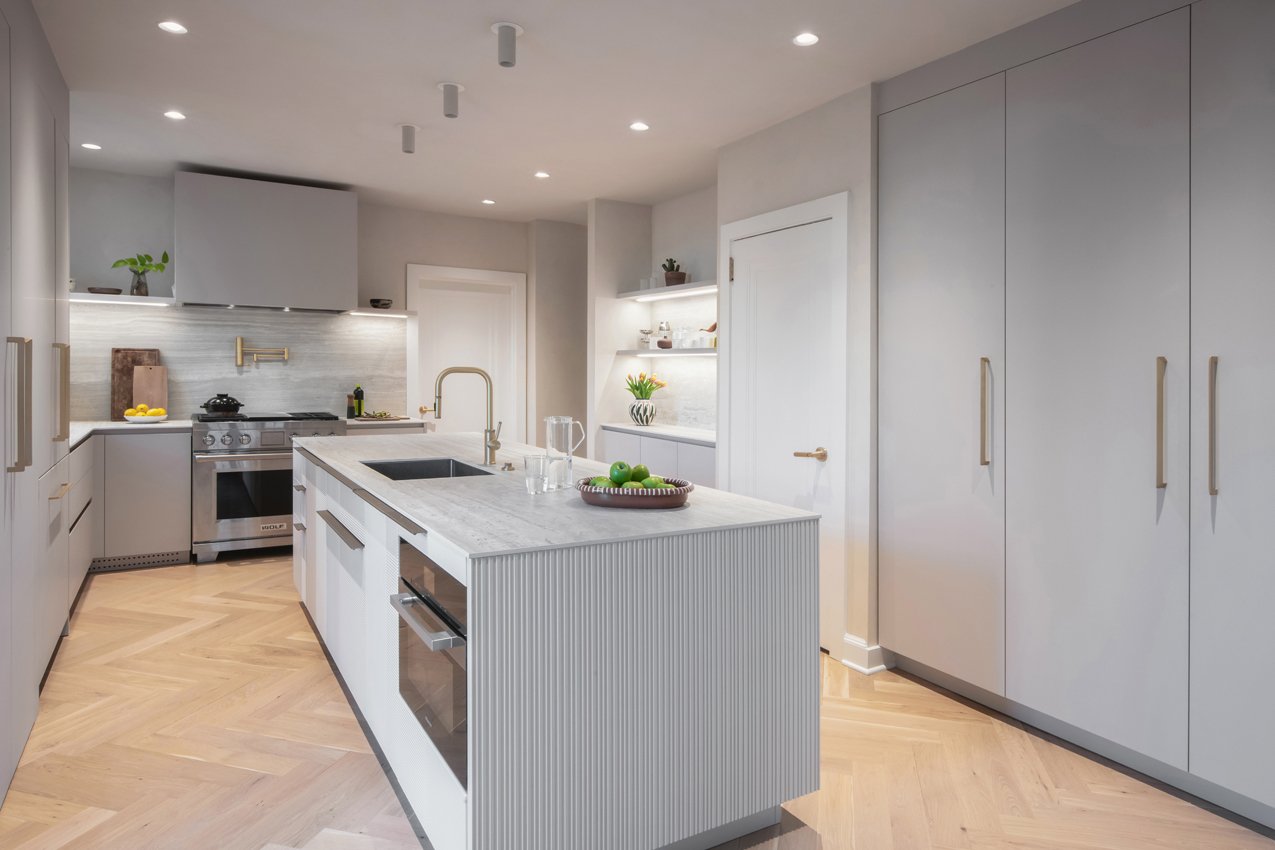
Sophisticated kitchen showing layered design and functional zones
If a single element is over- or under-done—too many tall cabinets, too few drawers, insufficient lighting—the whole composition feels off. The designer's role is to blend these ingredients so the kitchen "tastes right" every time you use it.
4. Timing and Sequencing: Not Everything Can Happen at Once
In the kitchen, you don't start every component of a complex meal at the same time. You marinate the protein in the morning, pre-cook the stock, then handle quick-fire dishes closer to service. The success of the meal depends on sequencing.
Design and construction follow the same logic:
Concept design comes before detailed drawings.
Structural and MEP decisions (mechanical, electrical, plumbing) come before cabinetry orders.
Cabinetry and stone are templated and fabricated on precise timelines.
Installation happens in stages, with multiple trades moving in and out of a tight space.
When homeowners see the process on site, it can feel messy or even slow—just as a kitchen mid-service looks chaotic. But a good architect or designer is constantly managing the sequence so that critical items happen at the right moment, in the right order, with minimal rework.
5. Constraints: Working With What the "Ingredients" Will Allow
Even the best chefs work within constraints: seasonal availability, dietary needs, or a specific budget for ingredients. Those constraints don't limit creativity; they shape it.
Kitchen design is full of similar constraints:
Columns, risers, low beams, and building regulations in older NYC apartments.
Gas vs. induction limitations, venting options, and electrical capacity.
Budget allocations between cabinetry, appliances, stone, and lighting.
The reality of how much storage you truly need vs. what fits.
A skilled designer doesn't simply "push cabinets to the wall." They reinterpret constraints as part of the recipe: hiding a column within a tall unit, turning a duct chase into a feature niche, or using a restricted wall length to create a more efficient work triangle.
This is the invisible problem-solving that clients often don't see but feel every day when the kitchen simply works.
6. Tools and Techniques: Beyond the Pretty Plating
A memorable dish depends as much on technique as on ingredients. Knife work, heat control, seasoning—all of these are invisible to the guest but determine the outcome.
In kitchen design, technique shows up in:
Cabinet system selection: choosing a system with the right internal hardware, flexibility, and finish options for the project.
Detailing: how panels die into walls, how toe kicks align, how reveals and shadow lines create calm, consistent geometry.
Tolerances: allowing for out-of-level floors, scribing panels to irregular walls, and planning seams in stone so they disappear into the design.
From the outside, it may all just look like "a nice kitchen." To an architect or designer, it reads like a well-executed dish: the technique holds the whole thing together.
7. Collaboration: The Kitchen Brigade vs. The Project Team
In a professional kitchen, there is a brigade: executive chef, sous chef, line cooks, pastry, dishwashing. Each role is specific, but everything is coordinated.
On a kitchen project, the "brigade" might include:
Architect or interior designer
Kitchen specialist / millwork designer
General contractor
Plumber, electrician, and mechanical trades
Stone fabricator
Appliance supplier and installer
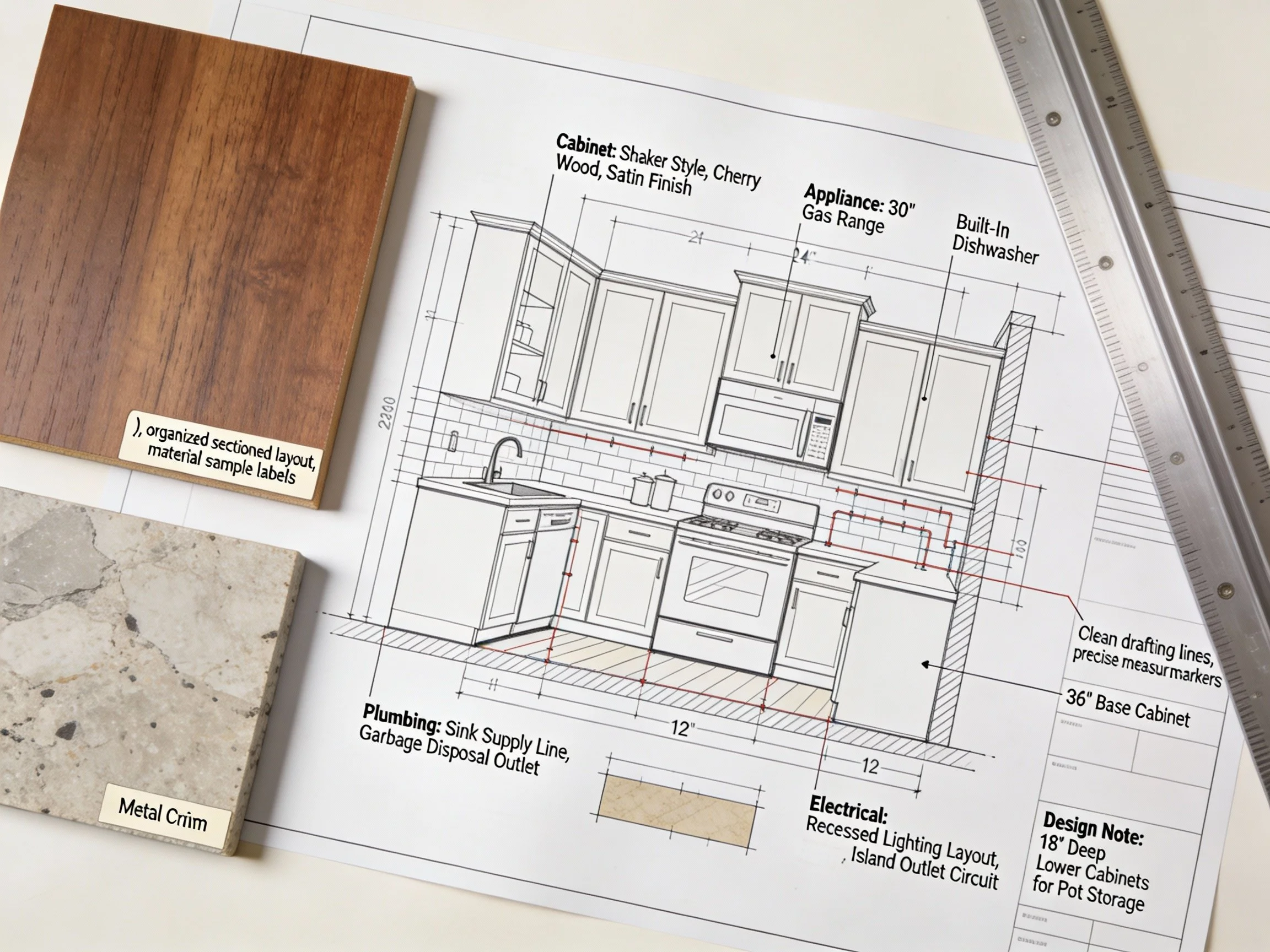
Design preparation - drawings, specifications, and material samples
The designer's job is often to act as the "executive chef" of the space—translating the client's brief into a clear plan and keeping all of these specialists working toward the same plate.
When that orchestration is missing, you feel it: misaligned cabinets, last-minute changes, appliances that don't fit, and details that look "almost right." When it's present, the homeowner only experiences the final, seamless result.
8. The Tasting: Mockups, Samples, and Iterations
Before a dish goes on the menu, a chef tastes, adjusts, and refines. Too salty? Not bright enough? Missing texture? Adjust.
Design operates the same way, using:
Plan options and 3D views to explore layouts.
Material samples under real light conditions.
Appliance mockups and cardboard boxes to simulate clearances.
Revisions based on feedback from both the client and the construction team.
This iterative phase can feel slow to clients who are eager to "just get started," but it is where costly mistakes are avoided—and where good kitchens become great ones.
9. The Service: Installation and the Final "Plating"
The night of the dinner party is where everything comes together. There is no time for big changes; you rely on the preparation you've already done.
Installation is similar. At this stage:
Cabinets, panels, and fronts are being placed to the millimeter.
Stone is installed and sealed.
Appliances are set, adjusted, and tested.
Lighting is aimed and fine-tuned.
All of the early work—the brief, the measurements, the coordination, the samples—shows up in the calmness of the final space. The goal is a kitchen that feels inevitable, as if it could never have been another way.
10. Why This Matters: Valuing the Design Process
If you are a homeowner planning a new kitchen, it's natural to focus on visible items: which range, which countertop, which cabinet finish. These are important choices, but they are only part of the story.
The real difference between "nice pictures" and a kitchen that supports your life for years is the process behind it—the design thinking, the technical coordination, and the orchestration of multiple trades.
Just as no one would expect a restaurant-quality tasting menu to appear without a chef, preparation, and a team, a truly integrated kitchen does not happen without design expertise and a structured process.
When you work with an architect or designer, you are not just paying for drawings. You are investing in all of the invisible mise en place that makes the project feel effortless in the end.
A Real Example
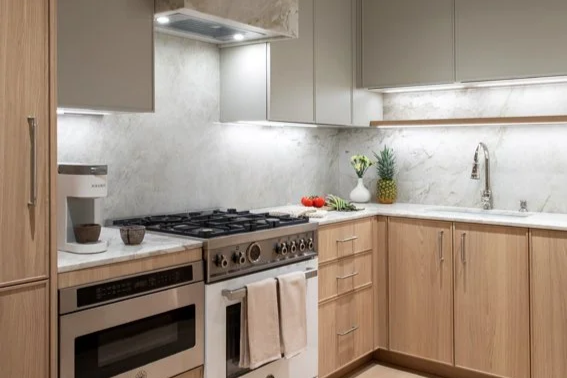
Sutton Place Kitchen
On a recent renovation at Sutton Place, our team faced a Manhattan classic challenge: how to integrate a sophisticated kitchen into a pre-war building where every inch of space had to work harder. The visible result is a calm, light-filled kitchen in Nordic Oak with premium stone surfaces. But behind that final image were weeks of site coordination, appliance selections, MEP planning, and cabinetry mockups to ensure the space felt inevitable rather than forced. That orchestration is the real craft.
Ready to Begin Your Kitchen Project?
If you are considering a renovation—or if you are an architect or designer looking for a kitchen partner—Gregory Hitchcock Design brings both the "recipe" and the "kitchen brigade" perspective to each project. The goal is always the same: a space that looks beautiful, works intuitively, and ages as gracefully as a favorite dish you never get tired of serving.
Connect with us to discuss your project → Click Here!